Your Cart is Empty
A single Flow Hive can transform how your garden performs, season after season. Download our guide, designed for gardeners exploring beekeeping for the first time.


A single Flow Hive can transform how your garden performs, season after season. Download our guide, designed for gardeners exploring beekeeping for the first time.

 159,000+ hives sold
 Patented innovation
 B-corp certified
 Fast AU Shipping
Newcastle
”I wanted to be able to produce all of our vegetables that we could live off and I knew that a huge part of having a really successful veggie garden was… actually pollination so I became a little bit fascinated with bees”
-Johanna Griggs
Newcastle


”I wanted to be able to produce all of our vegetables that we could live off and I knew that a huge part of having a really successful veggie garden was… actually pollination so I became a little bit fascinated with bees”
-Johanna Griggs
Brisbane
”It tastes super floral, super flowery, like a lavender. We've got quite a lot of lavender here in the rooftop farm. All the food from up here is going to be going and be used in the restaurant. A real proper farm to table concept.”
- Neven V.
Brisbane

”It tastes super floral, super flowery, like a lavender. We've got quite a lot of lavender here in the rooftop farm. All the food from up here is going to be going and be used in the restaurant. A real proper farm to table concept.”
- Neven V.
Sydney
"We have not had a problem pollinating our vegetables!"
- Rebecca B.
Sydney

"We have not had a problem pollinating our vegetables!"
- Rebecca B.
South Sydney
”The main reason we wanted to get bees was to improve our own produce. The honey was a bonus but it’s surprising how much honey you get. If you are a gardener, you'll just get such better results in your garden.”
- Jim S
South Sydney

”The main reason we wanted to get bees was to improve our own produce. The honey was a bonus but it’s surprising how much honey you get. If you are a gardener, you'll just get such better results in your garden.”
- Jim S
Gold Coast
”We're working in a veggie patch and they're just buzzing around us and we're just working together. The actual understanding of the bees is really a wonderful thing and it's it's such an amazing journey I'd recommend it to anybody”
- Sue
Gold Coast

”We're working in a veggie patch and they're just buzzing around us and we're just working together. The actual understanding of the bees is really a wonderful thing and it's it's such an amazing journey I'd recommend it to anybody”
- Sue

Because each frame can be harvested individually, you'll discover differences in colour, taste and texture that reflect the specific flowers your bees visit from your own garden!
Unlike store-bought honey that is heat-treated, blended and oxidised, Flow Hive honey is raw and unfiltered – so you'll be enjoying honey in its purest form.
Your bees forage within 5km of your hive, so every harvest reflects the flowers, trees and seasons unique to your region.
Research has shown that this gentler way of handling honey helps preserve more of its natural flavour compounds.

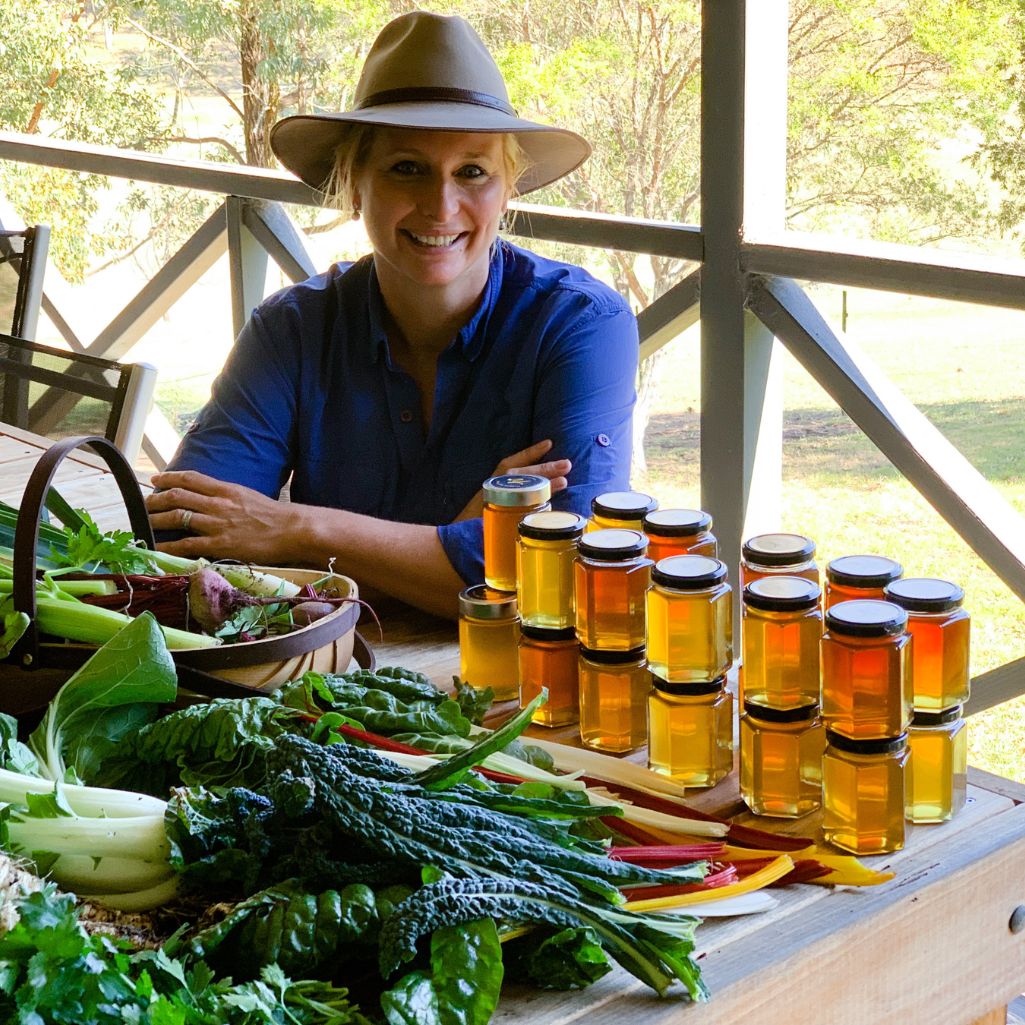
One Flow Hive can pollinate up to 50 million flowers a day, boosting your veggie patch, fruit trees, and flower beds.
And the best part? You’ll harvest your own incredibly delicious honey, straight from the hive to your kitchen table.
⭐⭐⭐⭐⭐
I had no idea bees were going to provide as much food through pollination as they have... I wish I had done this 10 years earlier.
Joh Griggs, verified customer
⭐⭐⭐⭐⭐
Our veggie and fruit pollination is the best we've had.
Chris H, verified customer
⭐⭐⭐⭐⭐
Our hive is thriving and making plenty of delicious honey for us to share. As a plus, our flowers and fruits are growing much faster this year.
Brandon W, verified customer
⭐⭐⭐⭐⭐
The Flow Hive has helped me take one more step toward self-sufficiency and sustainable living, and I’m deeply grateful for the innovation and integrity behind this product.
Bridget G, verified customer

The Flow Hive is used backyards, gardens, rooftops, and balconies of all shapes and sizes across 130 countries.
A Flow Hive only needs a small amount of space, so you don’t need a big property or a huge backyard to get started.
The main thing is to choose a spot with a little room in front of the hive for the bees to fly in and out (called their "flight path"), and enough space behind it so you can comfortably harvest your honey. Bees also tend to be happiest when the hive is sheltered from strong winds, gets some morning sun, and stays fairly dry. In Australia, many beekeepers like to face the hive entrance roughly north or north-east so the bees catch the early sun.
Once you’ve chosen your spot, the hard part is done! From there, your hive becomes a lovely little part of your garden or outdoor space; something to look forward to checking in on and making your own.
A beautiful focal point for your garden with a sweet delicious reward


We have a swarm of resources available to help you every step of the way, including a weekly live-streamed Q&A with the inventor Cedar, phone and email support, PLUS free 30-day access to our comprehensive online beginner beekeeping course.
We joined Karen for a tour of her blooming garden and her first-ever Flow Hive harvest. In this video, she tells us about the pollination boost her bees have provided and the differences between conventional honey harvesting and the Flow Hive.
"The bees use this garden, and I do too!"
🎬 Watch the following video to learn how the Flow Frames work.
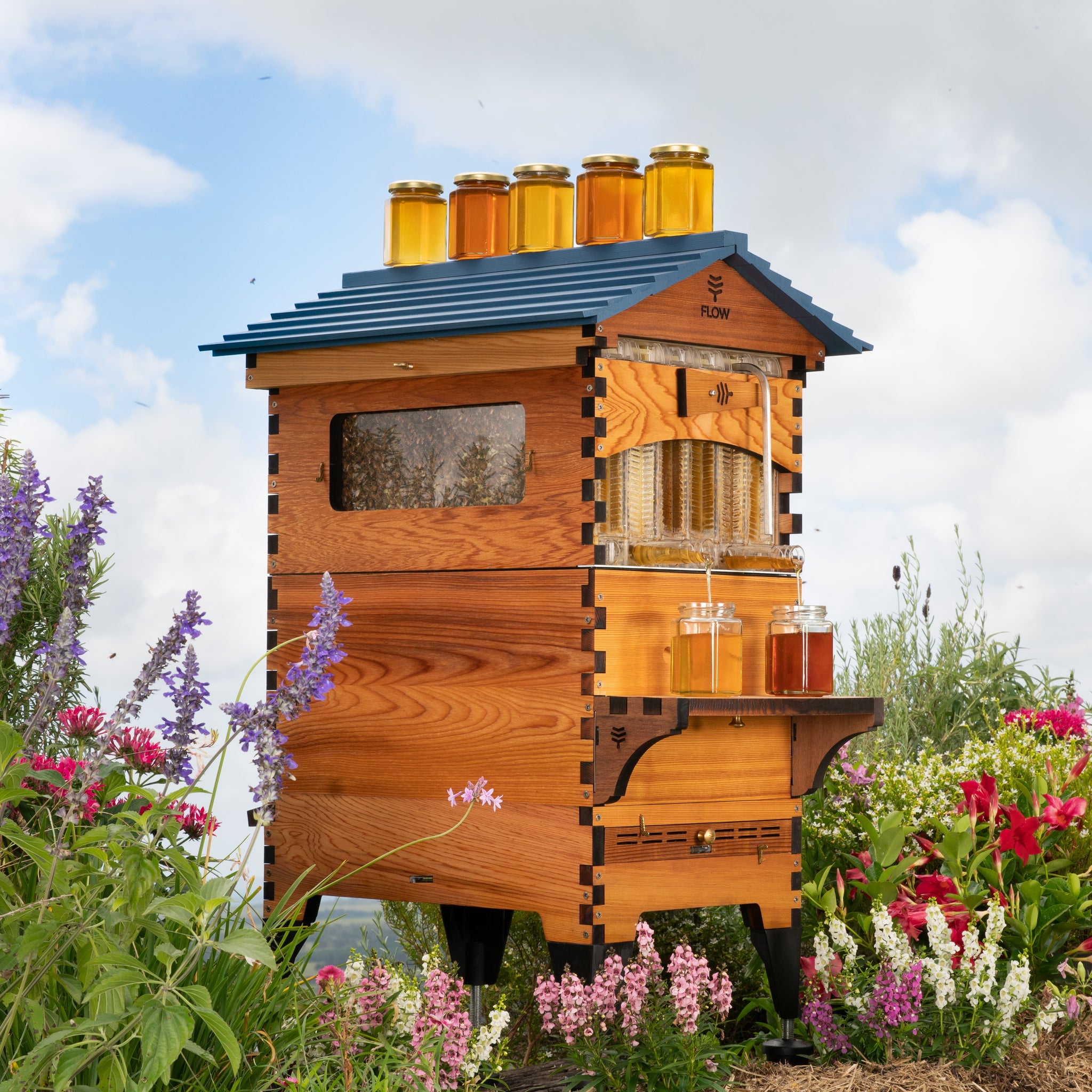
The Flow Hive includes Flow Frames which are a partially formed, honeycomb matrix. The bees fill the honey cells and cap them off.
When you insert the Flow Key and split the honey cells, gravity does the rest of the work, and the honey simply flows into the trough, through the tube and into your jar.
Don’t worry about the bees getting squashed. We’ve designed it so no bees get harmed when the mechanism is activated, with little gaps they can safely hang out in while the honey flows out.


Our Starter Bundle is perfect for anyone who is setting up a Flow Hive for the first time as it comes with everything you need, plus an incredible saving.
Featuring a Flow Hive, a beekeeper’s suit, stainless steel smoker, goatskin gloves and a sweet saving! Add an extra suit for family members!
From $1,318


